




Dabba Angadis: When Shopping Was About Conversation, Credit, Community


Bengaluru is a city of many hearts, alive in sudden rain showers, voices that mingle across languages, and a rhythm that lingers in unhurried metro rides, the cool evening breeze, and the lush green trees that have watched generations grow. This blog gathers these moments to celebrate the Bengaluru that has always felt like home.
Dabba Angadis: When Shopping Was About Conversation, Credit, Community
It usually started with being sent out for something small, a coin placed in the palm, a quick instruction, and the walk to the dabba angadi. Two ice candies for a paise, sticky fingers, jars of sweet treats with rusted lids, an old radio crackling news and supari packets hanging high are things we all remember. In neighbourhoods across Bengaluru, daily life once revolved around modest street-corner shops, so small they were almost easy to miss, yet so central that life organised itself around them. These were the dabba angadis, unassuming spaces that held together the routines of ordinary living.
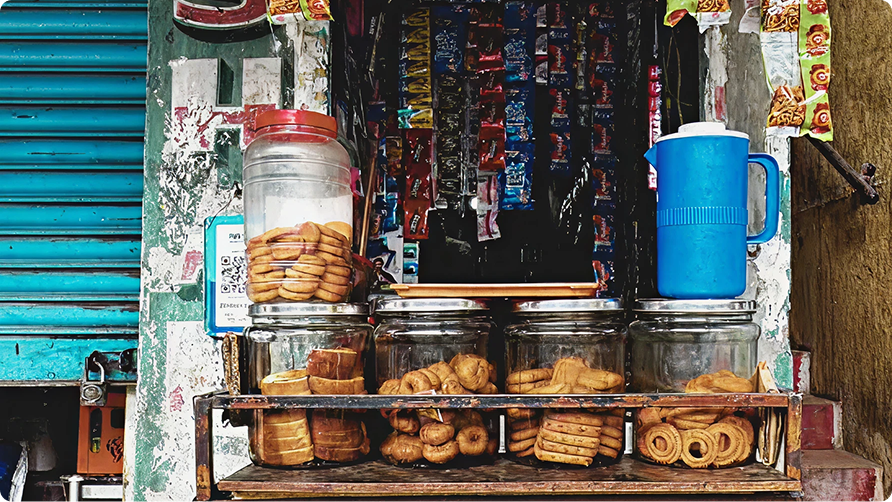
A dabba angadi was typically a tiny, box-like structure constructed from tin sheets, with a small counter facing the street. In the late 19th and 20th centuries, when the city was still expanding, the only established localities were the Pete area. As newer localities like Malleshwaram, Basavanagudi and Shivajinagar formed, these neighbourhoods needed daily essentials without having to travel to the central markets. Dabba angadis were the answer.
They eventually became local lifelines. Their shelves held only what daily life required: rice, sugar, lentils sold loose and measured by tin cups; cooking oil in reused bottles; matchboxes, agarbattis, soaps, slate pencils, bangles, and a handful of biscuits stored in glass jars. There was no excess, no display, only utility.
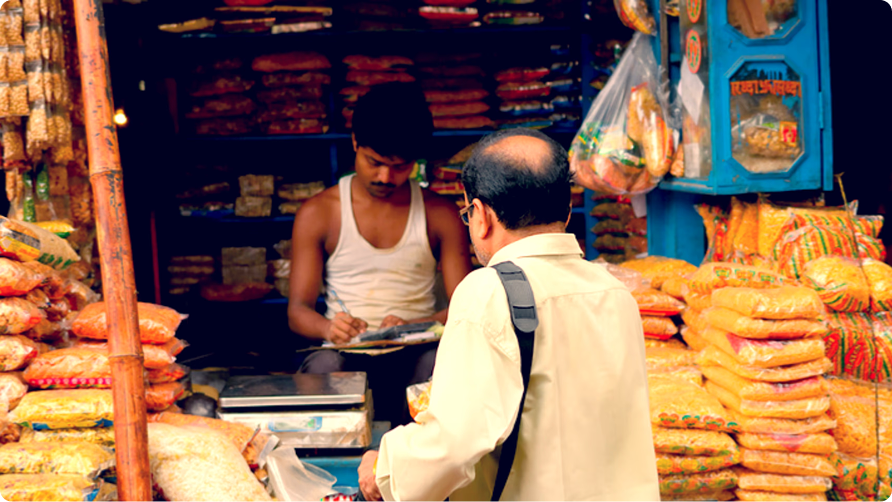
Then there were the kaka angadis too, which took the name from the person behind the counter. He usually knew most households by their address and memorised the patterns of who would visit, the most frequently brought items and who would settle their accounts at the end of each month.
Beyond selling essentials, these shops served as third spaces. Some even had a small bench outside, where people sat with a cup of tea, lingering longer than planned. These pauses often led to conversations about the weather, the locality, or nothing in particular, turning them into a place of familiarity, comfort, and friendship.
Post-1990s liberalisation and rapid urban growth transformed Bengaluru’s retail scene, causing many angadis to vanish. By the 2000s, supermarkets and chain stores began replacing proximity with choice and speed. A single visit could cover what once took a few familiar stops. Some angadis adapted, adding packaged foods, mobile recharges, photocopying services, and eventually digital payments, finding ways to stay relevant within a changing economy.
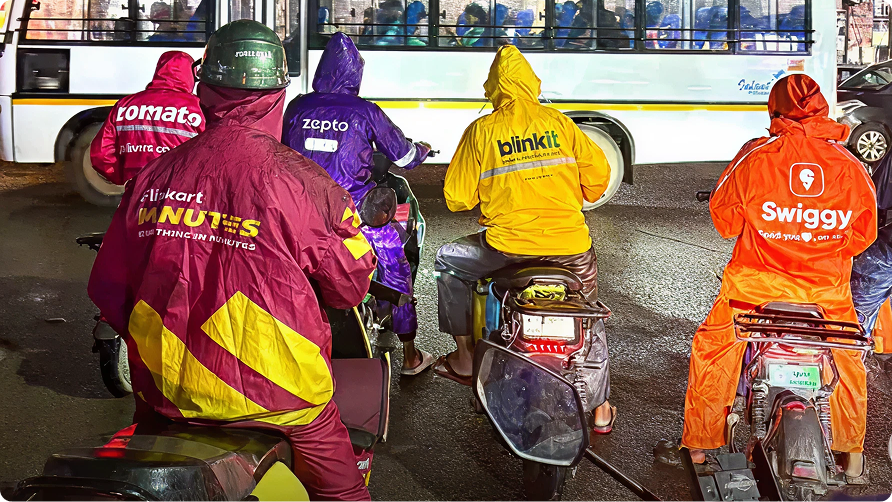
But in the last few years, e-commerce and hyperlocal delivery apps have transformed everyday consumption even further. With household items available at the click of a button and delivered in minutes, convenience has come to outweigh familiarity. The angadi, once woven into the rhythm of the neighbourhood, now competes with a system that values speed over presence, and efficiency over human exchange.
And yet, the angadi has not vanished entirely. In a few lanes, it still exists, smaller now, often run by the same hands that have opened the shutters for decades. These shops may no longer define how the city shops, but they continue to define how the city remembers.
Got a sweet memory of Bengaluru? Share it with us.
Big or small, recent or old, we’re open to every memory you want to share.

.png)




.png)
