




Echoes of Trade in a Changing City: In the lanes of Bengaluru Pete, repair is still a way of life


You can still hear it if you slow down enough: the click-clack of a typewriter, the low hum and static of an old radio being tuned, the soft scrape of chalk over fabric before it is carefully cut. For some, these are not sounds they hear anymore, but sounds they remember. But for others, this is still daily life.
In the dense, timeworn lanes of Bengaluru Pete, this memory hasn’t faded.
Walk down SP Road, and it begins to feel like a kind of time capsule, one where the old is constantly restored. Behind glass counters and coils of wire, technicians continue to repair radios, amplifiers, and aging electronics that most people would have already discarded. The work is slow, precise, and deeply familiar. Here, things are not obsolete. They are worth fixing, worth keeping.
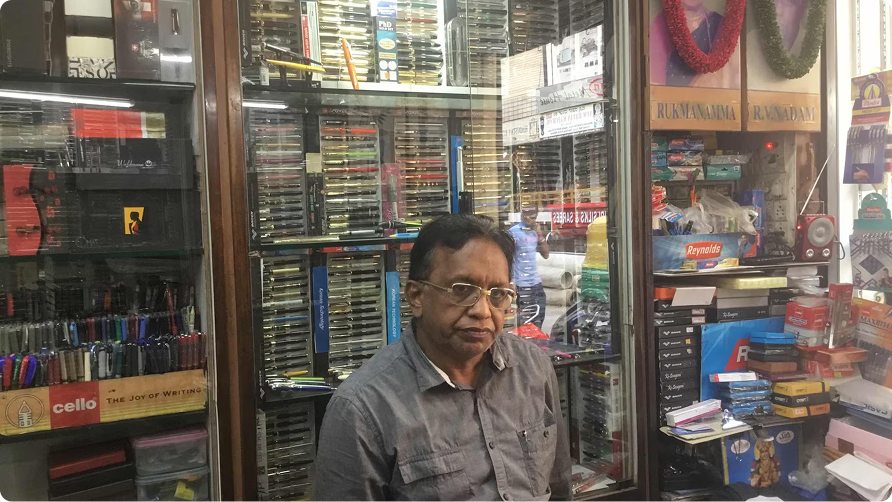
Established in the 1940s, RV Nadam & Co is another kind of continuity. Known for its range of writing instruments, it is their fountain pens that make people revisit. It is said that M. Visvesvaraya was a regular here, a detail that ties the shop to a much older Bengaluru.
Not far from here, in areas like Cubbonpet and Chickpet, typewriters still make their way to repair tables. Shops such as Victory Service Centre and Sheeja Typewriter Services continue to service machines that date back decades. Their customers range from government exam aspirants practicing typing tests to legal offices that still rely on typed documentation. Repairs can be as simple as cleaning, or as complex as sourcing parts from dismantled machines, often costing anywhere between ₹500 and ₹3000.
And then there is everything else the Pete fixes.
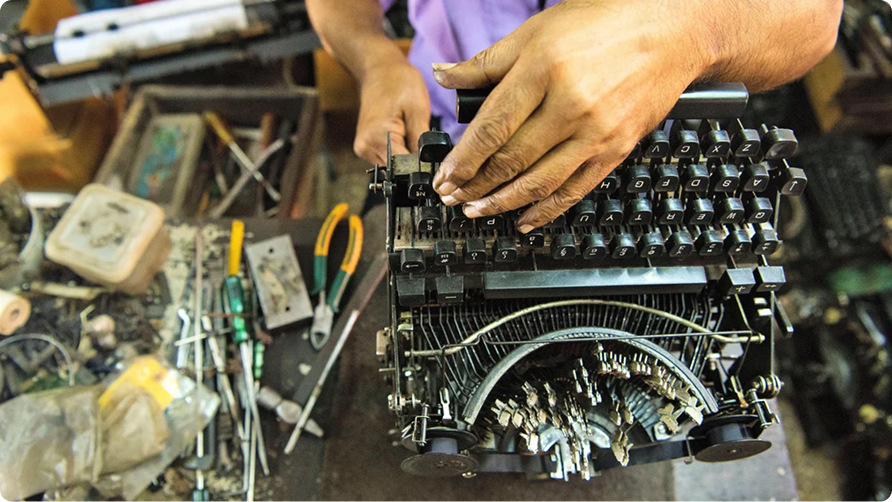
In these lanes, watches are opened and recalibrated, zippers are replaced instead of being discarded, old mixers and irons are brought back to life, and even small, everyday items like locks, suitcases, and calculators are repaired rather than replaced. Some shops specialise in rewiring vintage lamps, others in restoring musical equipment or sharpening tools. The work exists in volume, woven into the everyday functioning of the area.
Alongside this, tailoring machines run through the day, the air carrying the faint smell of fabric and starch. Tailors continue to work without digital measurements or standardised patterns. In narrow storefronts, fabric is measured by instinct, cut by hand, and stitched on pedal-operated machines that have outlived passing trends.
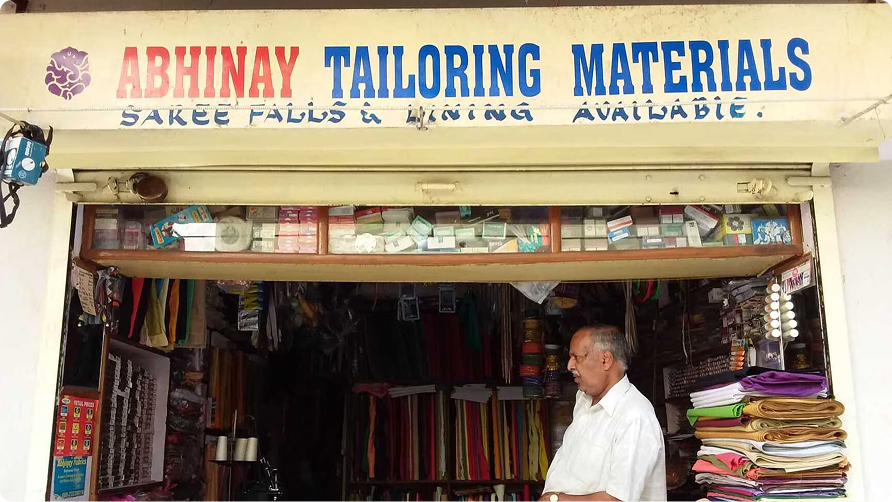
What ties all of this together isn’t just nostalgia, it’s familiarity. These streets were always built around work. One lane for textiles, another for metal, another for repairs. People came here because they knew exactly who to go to.
That hasn’t entirely changed.
Even now, you don’t stumble into these shops by accident. You’re sent here. Someone tells you, “Go to that lane, the third shop on the left, he’ll fix it.” And more often than not, they do.
Step outside, and the city feels different—faster, more disposable. Things are replaced before they’re understood. But here, the instinct is still to fix first. Not because it is romantic or old-fashioned—but because this is how it has always been done.
Got a sweet memory of Bengaluru? Share it with us.
Big or small, recent or old, we’re open to every memory you want to share.
.png)








.png)
